
For small and midsize business leaders, HR administration is a double-edged sword. It’s essential for compliance and employee well-being, but it also consumes valuable time and resources that could be spent on growth. Managing payroll, navigating complex multi-state employment laws, and securing affordable, high-quality health benefits can feel like a full-time job in itself. This constant administrative drain not only stifles strategic focus but also introduces significant risks, from costly compliance penalties to losing top talent to competitors with better perks.
If your current HR setup feels like a bottleneck, understanding the 8 Key Advantages of Outsourcing Human Resources for SMBs can reveal the path to improvement. The pressure to manage everything in-house often leads to costly mistakes and missed opportunities. Business owners and their teams are forced to become experts in areas far outside their core competencies, such as state-specific leave laws, workers’ compensation claims, and benefits administration. This diverts focus from mission-critical activities like product development, customer service, and strategic planning.
This article breaks down the 10 most impactful benefits of outsourcing HR functions, providing a clear roadmap for how partnering with a Professional Employer Organization (PEO) can transform your operational efficiency, reduce liability, and unlock your company’s full growth potential. We will move beyond generic advice to provide a detailed analysis of each benefit, supported by practical examples and actionable steps. You’ll gain a comprehensive understanding of how outsourcing HR helps you access Fortune 500-level benefits, eliminate payroll errors, manage compliance with confidence, and ultimately improve your bottom line.
1. Access to Fortune 500-Level Health Benefits at Small Business Pricing
One of the most immediate and impactful benefits of outsourcing HR functions to a Professional Employer Organization (PEO) is gaining access to high-caliber employee benefits typically reserved for large corporations. For small and midsize businesses (SMBs), competing for top talent often means trying to match the comprehensive health plans offered by enterprise-level companies, which can be prohibitively expensive.
A PEO solves this problem by grouping its smaller clients together into one large pool for benefits negotiations. This collective bargaining power allows the PEO to negotiate with major insurance carriers for better rates and more robust plan options than any single SMB could secure on its own. The result is a significant competitive advantage in the talent market.

How It Works in Practice
By partnering with a PEO like Helpside, a 45-employee consulting firm was able to reduce its annual healthcare spending by a significant amount while simultaneously upgrading employee coverage. Similarly, small businesses across various states have seen notable reductions in their medical premiums after adopting a PEO model. This isn’t just about saving money; it’s about providing employees with superior PPO plans and lower deductibles that foster loyalty and well-being. To explore this topic further, learn more about offering health insurance through a PEO.
Actionable Next Steps
To see if this is the right move for your business, follow these steps:
- Conduct a Baseline Analysis: Before engaging a PEO, calculate your current total benefits cost. Include premiums, administrative time spent on benefits management, and broker fees to establish a clear baseline for comparison.
- Review Your Renewal Window: The ideal time to explore a PEO is during your annual benefits renewal window, typically 60 to 120 days before your current plan expires. This provides ample time for evaluation without disrupting coverage.
- Model Long-Term Savings: Ask potential PEO partners to model multi-year cost projections. This helps you understand the long-term financial trajectory and stability compared to the volatile small-group market.
2. Elimination of Payroll Processing Errors and Compliance Risk
One of the most critical benefits of outsourcing HR functions involves transferring payroll and tax administration to a PEO. This move significantly mitigates the risk of costly errors and non-compliance penalties. For a growing business, especially one operating in multiple states, navigating the complex web of federal, state, and local payroll tax laws, wage and hour regulations, and filing deadlines is a monumental task fraught with risk.
A PEO assumes these burdens, leveraging dedicated experts who specialize in payroll processing and multi-state compliance. This ensures employees are paid accurately and on time, while all tax withholdings, payments, and filings are handled correctly. This shift from in-house management to expert oversight transforms payroll from a high-risk administrative headache into a streamlined, reliable function.

How It Works in Practice
The impact of expert payroll management is tangible and immediate. For instance, businesses that partner with a PEO often eliminate recurring quarterly payroll reconciliation errors that can lead to significant penalties and accounting fees. For companies with multi-state operations, a PEO ensures correct tax withholding for each locality, avoiding costly notices from state revenue agencies. This level of accuracy and compliance is a direct result of the specialized systems and expertise a PEO partner provides.
Actionable Next Steps
To evaluate how outsourcing payroll could benefit your company, consider the following steps:
- Audit Your Current Process: Conduct a thorough audit of your payroll records from the past 12-24 months. Quantify the costs associated with errors, including penalties, staff time spent on corrections, and any external consultant fees.
- Request Service Level Agreements (SLAs): When evaluating potential PEOs, ask for their detailed payroll SLAs and inquire about any accuracy or penalty guarantees they offer. This clarifies their commitment to precision and accountability.
- Plan for a Smooth Transition: If you decide to move forward, schedule comprehensive payroll training sessions during the PEO onboarding process. This ensures your team understands the new system and procedures from day one, minimizing disruption.
3. Reduction in Time and Cost of HR Administrative Tasks
A significant operational advantage of outsourcing HR is the immediate offloading of routine, time-consuming administrative burdens. Functions like new hire onboarding, benefits enrollment, policy administration, and employee offboarding are critical but divert valuable internal resources from strategic, revenue-generating activities. Partnering with a PEO transfers these tasks to dedicated professionals who manage them with greater efficiency and accuracy.
This strategic delegation frees up your internal HR staff or management team to concentrate on core business objectives, such as employee development, performance management, and cultivating a strong company culture. The result is a more focused, productive leadership team and streamlined internal processes. One of the key benefits of outsourcing HR functions is this newfound capacity for strategic work, which directly impacts long-term growth and employee retention.
How It Works in Practice
By partnering with a PEO, a 50-person company can eliminate many hours of weekly administrative work related to onboarding and offboarding. This allows an HR manager to design and implement a new talent retention program that reduces turnover. Similarly, a 30-employee firm can leverage its PEO’s digital platform to reduce the time spent on annual benefits enrollment from a multi-week manual process to just a few days, minimizing disruption and improving employee experience.
Actionable Next Steps
To quantify the potential time savings for your business, follow these steps:
- Conduct a Time Audit: For four weeks, have your HR administrator or office manager meticulously track the time spent on routine tasks like payroll processing, onboarding paperwork, and answering benefits questions. This provides a clear data-driven baseline.
- Prioritize High-Impact Tasks: Identify the top three most time-consuming administrative functions from your audit. When evaluating PEOs, specifically ask how their processes and technology will streamline or eliminate these specific burdens.
- Document Current Processes: Before transitioning, create simple Standard Operating Procedures (SOPs) for your current HR workflows. This documentation helps ensure a smooth handover to the PEO and clarifies every step of the process for a seamless transition.
4. Expert Compliance Management Across Multiple States and Jurisdictions
For multi-state employers, navigating the complex web of federal, state, and even local employment laws is a significant challenge. Each jurisdiction has its own rules for wages, paid leave, hiring practices, and termination procedures, creating a minefield of potential liabilities. Keeping policies and handbooks current across different states requires constant vigilance and specialized expertise, a burden most small and midsize businesses cannot sustain in-house.
Outsourcing HR to a PEO provides direct access to a team of compliance specialists. These experts continuously monitor regulatory changes and ensure your business practices align with every applicable law, from California’s specific meal break requirements to New York City’s predictive scheduling rules. This proactive approach is one of the key benefits of outsourcing HR functions, as it shifts the immense burden of compliance from your team to dedicated professionals, drastically reducing the risk of costly violations, lawsuits, and penalties.
How It Works in Practice
A PEO’s compliance support can be transformative. For instance, a PEO can conduct a proactive employee classification review to identify potential misclassifications under the Fair Labor Standards Act (FLSA) or state-specific wage laws, helping a business avoid significant back-wage liability. Similarly, a professional services firm with offices in multiple states can eliminate the need for several costly HR consultants by consolidating compliance management under a single PEO partner. This centralized expertise ensures consistent and correct application of laws as companies expand. To better understand the stakes, you can learn more about the top employer compliance challenges.
Actionable Next Steps
To leverage this benefit for your multi-state operations, follow these steps:
- Audit Your Current Compliance Posture: Before engaging a PEO, review the last three years of any litigation, employee complaints, Department of Labor inquiries, or known violations to identify recurring problem areas. This audit creates a clear picture of your current risk level.
- Request a State-Specific Roadmap: During discovery calls with potential PEOs, ask them to outline a compliance roadmap for each state you operate in. This demonstrates their jurisdictional expertise and ability to manage your specific needs.
- Schedule Quarterly Compliance Reviews: For the first year with a PEO, schedule regular quarterly meetings to review policies, address new legislation, and identify potential gaps. This establishes a strong, proactive compliance foundation.
5. Improved Employee Retention Through Enhanced Benefits and Support
High employee turnover is one of the most significant and costly challenges facing small and midsize businesses. Employees consistently rank comprehensive benefits and a supportive HR environment as top priorities, and companies unable to deliver in these areas often struggle to keep their best people. Outsourcing HR to a PEO directly addresses this by providing the tools to create an environment where employees feel valued and secure.
A PEO allows businesses to offer competitive, enterprise-level benefits and provide access to dedicated HR support professionals. This combination not only attracts high-caliber candidates but also significantly boosts loyalty and engagement among the existing team. By enhancing the overall employee experience, businesses can create a powerful competitive advantage, reduce disruptive turnover, and foster a more stable, productive workforce.
How It Works in Practice
The impact on retention is tangible and financially significant. For example, after partnering with a PEO to upgrade its benefits package, a small consulting firm may see its annual turnover drop significantly, saving thousands in recruitment and training costs. Similarly, a professional services firm might report that gaining access to top-tier medical plans, previously out of reach, became a key factor in recruiting and retaining highly sought-after talent. This illustrates how one of the core benefits of outsourcing HR functions is its direct contribution to workforce stability.
Actionable Next Steps
To leverage a PEO for improved retention, consider these strategic actions:
- Conduct a Pre-Engagement Survey: Before partnering with a PEO, survey your employees to gauge their satisfaction with current benefits and HR support. This creates a valuable baseline to measure improvement against.
- Develop a Communication Plan: Upon launching new PEO-provided benefits, create a clear communication plan. Use side-by-side comparisons to highlight the upgrades and ensure employees understand the enhanced value.
- Track Retention Metrics: Monitor your retention rates monthly after implementation. Identify roles or departments with historically high turnover and target them with specific communications about relevant new benefits, such as wellness programs or an Employee Assistance Program (EAP).
6. Predictable, Transparent Pricing Without Hidden Fees or Long-Term Contracts
One of the most significant concerns for businesses evaluating an HR outsourcing partner is the financial commitment and potential for unforeseen costs. The PEO industry can sometimes be perceived as having complex pricing, hidden administrative fees, and rigid multi-year contracts that lock clients in, regardless of service quality or changing business needs. This model creates financial uncertainty and can lead to frustration down the line.
A key benefit of outsourcing HR functions to a transparent partner is gaining control over your budget with a straightforward pricing structure. Instead of vague percentage-of-payroll fees or contracts with built-in annual escalators, a clear per-employee-per-month (PEPM) model allows for precise financial forecasting. This transparency eliminates the risk of vendor lock-in and ensures the PEO remains motivated to consistently deliver value to retain your business.
How It Works in Practice
This approach directly impacts your bottom line and operational flexibility. For instance, a growing company scaling from 30 to 75 employees can find that a flexible PEPM model allows them to seamlessly manage costs without complex contract renegotiations. Choosing a provider with a no-contract model provides the freedom to adapt as business needs evolve, ensuring the partnership remains mutually beneficial.
Actionable Next Steps
To ensure you secure a predictable and fair pricing model, follow these steps:
- Request a Detailed Breakdown: Ask potential PEOs for a comprehensive pricing sheet that clearly outlines all costs. Scrutinize it for setup fees, termination penalties, and separate charges for services like workers’ comp administration or employee training.
- Model Multi-Year Scenarios: Create a three-year financial projection comparing your current HR costs against proposals from different PEOs. Factor in potential headcount growth to see how each pricing model scales over time.
- Clarify All Contract Terms: Do not sign any agreement without fully understanding the termination clause, notice periods, and any auto-renewal provisions. A partner confident in their service, like Helpside, won’t need to lock you into a long-term contract.
7. Reduced Workers’ Compensation Costs Through Safety Training and Claims Management
One of the most significant, yet often overlooked, benefits of outsourcing HR functions is the ability to strategically reduce workers’ compensation expenses. For many businesses, particularly those in higher-risk industries, workers’ comp premiums can be a major operational cost. A PEO mitigates this expense through a proactive, two-pronged approach: expert safety program implementation and diligent claims management.
PEOs provide access to risk management specialists who conduct workplace hazard assessments, develop customized safety training programs, and help instill a culture of safety. This focus on prevention directly reduces the frequency and severity of workplace injuries. When a claim does occur, the PEO’s dedicated team manages the entire process, ensuring it is handled efficiently and defending the business against questionable or fraudulent claims, which protects your experience modification rate (E-Mod) and helps control future premiums.
How It Works in Practice
By partnering with a PEO, a company can often achieve a reduction in its annual workers’ compensation premium increases through tailored safety programs. A PEO’s claims management expertise can also be crucial in defending against a questionable injury claim, potentially avoiding a significant settlement and preventing a negative impact on the company’s loss history.
Actionable Next Steps
To evaluate how a PEO can impact your workers’ compensation costs, consider the following steps:
- Audit Your Claims History: Review your workers’ compensation premium and claims history from the past three to five years. Identify trends in injury types, frequency, and associated costs to establish a clear baseline.
- Request a Safety Program Review: Ask a potential PEO partner to review your current safety protocols and propose a curriculum aligned with your specific industry risks, from office ergonomics to job site safety.
- Benchmark Your E-Mod Rate: Compare your company’s experience modification rate against the industry average. A rate above 1.00 indicates higher-than-average claims costs and presents a clear opportunity for improvement.
8. Faster Business Growth and Improved Operational Stability
A significant long-term benefit of outsourcing HR functions is the ability to accelerate business growth while building a more stable operational foundation. Small and midsize businesses often find their leadership teams consumed by administrative tasks like payroll, compliance, and benefits management, diverting valuable time and focus from core, revenue-generating activities. Outsourcing these complex functions frees up executive bandwidth, allowing leaders to concentrate on strategy, innovation, and expansion.
This strategic shift provides the infrastructure needed to scale effectively. As a company grows, so do its HR complexities, from multi-state compliance to more sophisticated employee relations issues. A PEO partner provides a ready-made, expert HR department that grows with the business, ensuring operational stability and preventing the common growing pains that can derail a company’s trajectory. This is a key reason why businesses partnered with a PEO often grow faster than their peers.
How It Works in Practice
The impact on growth is tangible. For example, a small consulting firm may be able to scale its employee count significantly in just a few years after partnering with a PEO, with the CEO crediting the partnership for freeing up leadership to expand service lines and their geographic footprint. A startup that begins its PEO relationship with a small team can grow substantially without major compliance issues, a level of operational maturity that can be a key differentiator for investors. Effective HR technology integration is crucial in these scenarios, ensuring that outsourced functions align perfectly with internal systems as the company expands.
Actionable Next Steps
To leverage an HR partner for growth and stability, consider these steps:
- Document Time Allocation: Before engaging a PEO, track how many hours your leadership team spends on non-revenue-generating HR tasks each week. This creates a clear “before” picture to quantify the time redirected to growth activities later.
- Align Growth Plans with PEO Capabilities: During discussions with a potential PEO, share your headcount and geographic expansion goals. Ensure their infrastructure and expertise can support your specific growth plan, especially regarding multi-state payroll and compliance.
- Establish Growth-Focused Reviews: Once partnered, set up quarterly business reviews with your PEO representative. Use this time to discuss growth metrics, analyze challenges, and identify opportunities where their HR support can help you scale more efficiently.
9. Seamless Technology Integration and Single Platform for HR Management
One of the most significant operational benefits of outsourcing HR functions is gaining access to a unified, sophisticated Human Resources Information System (HRIS). Many small businesses juggle multiple disconnected platforms for payroll, benefits administration, time tracking, and compliance, leading to manual data entry, errors, and a fragmented employee experience. This disjointed approach creates data silos and consumes valuable administrative hours.
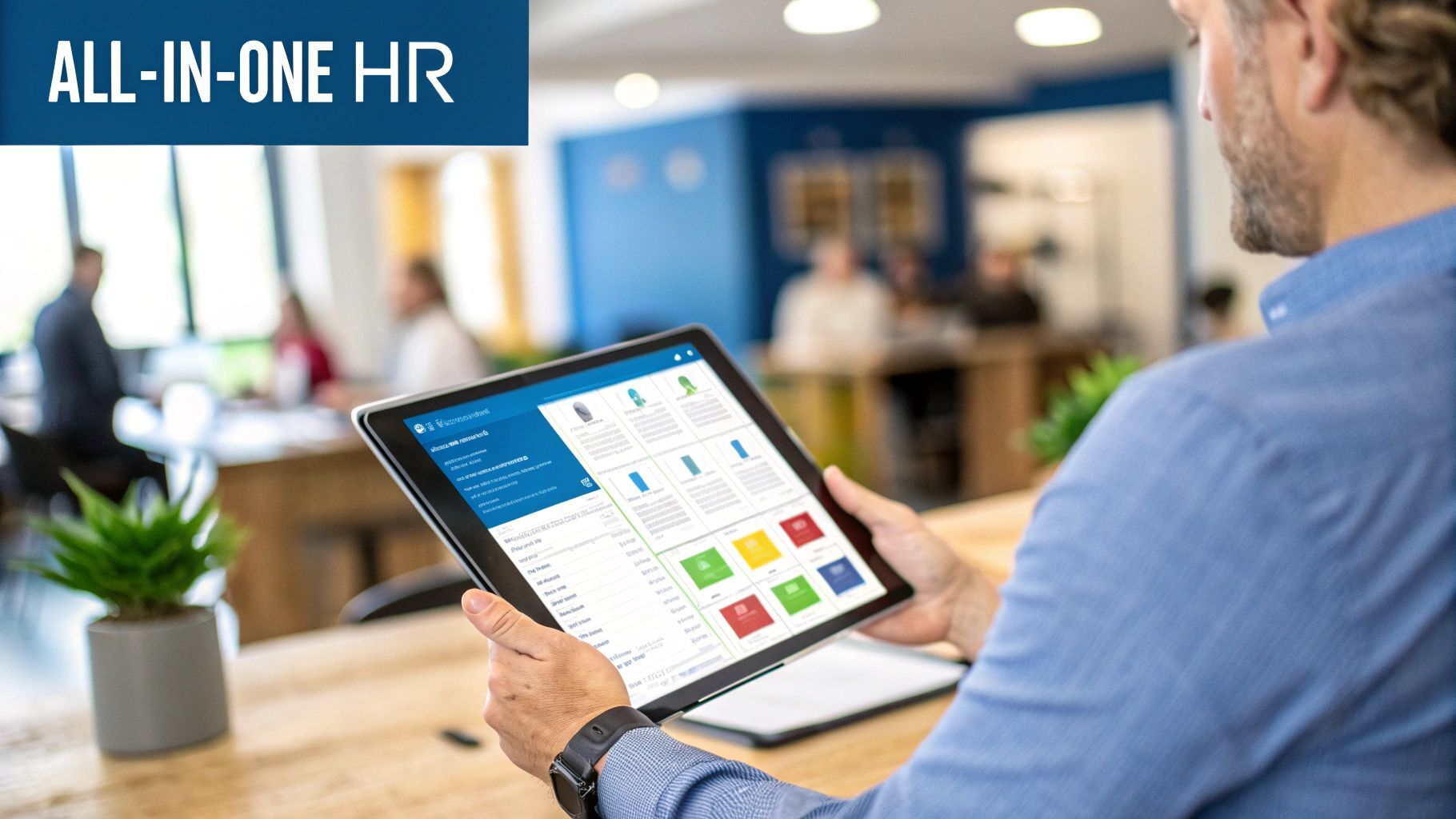
A PEO solves this by providing a single, integrated technology platform that consolidates all core HR functions. This all-in-one system serves as a central hub for employee data, payroll processing, benefits enrollment, compliance calendars, and performance management. By eliminating the need for separate vendors and manual spreadsheets, businesses can streamline operations, improve data accuracy, and empower both managers and employees with self-service tools.
How It Works in Practice
By consolidating its processes onto a single PEO platform, a company can eliminate multiple separate vendor logins and manual spreadsheet tracking, reducing monthly HR administrative time. Similarly, a professional services firm can use an integrated system to automate its benefits enrollment workflow, cutting the total processing time from weeks down to just a few days. This centralized technology gives leaders a real-time dashboard to monitor key metrics like payroll accuracy, compliance deadlines, and benefits utilization across the organization.
Actionable Next Steps
To evaluate if an integrated platform is the right move for your business, follow these steps:
- Audit Your Current Tech Stack: Document every system you currently use for HR, payroll, and benefits. Identify specific pain points, data silos, and areas where manual work is required to connect disparate systems.
- Request a Detailed Platform Demo: During the PEO evaluation process, ask for a comprehensive walk-through of their technology. Focus on integration capabilities, reporting features, and the user experience for both administrators and employees.
- Establish Baseline Metrics: Before implementation, calculate the total administrative time your team spends on HR tasks each month. This will create a clear baseline to measure the efficiency gains and ROI after transitioning to the unified platform.
10. Access to Specialized HR Expertise Without Hiring Full-Time HR Staff
For many small and midsize businesses, navigating complex HR challenges requires senior-level expertise that is too expensive to justify for a full-time role. A significant benefit of outsourcing HR functions is gaining on-demand access to a team of specialized professionals, from employee relations consultants to compensation analysts, without the overhead of their salaries. This model provides Fortune 500-level strategic guidance precisely when it’s needed most.
A PEO acts as a deep bench of HR specialists that a business can call upon for episodic yet critical situations. Whether it’s conducting a sensitive workplace investigation, designing a competitive compensation structure, or managing a difficult termination, you gain the support of seasoned experts. This allows internal teams to focus on daily operations while complex issues are handled by professionals with deep, specific knowledge.
How It Works in Practice
Imagine a 35-employee tech company facing a complex employee grievance. Instead of tasking an inexperienced manager with a high-stakes investigation, the company leans on its PEO partner. A dedicated HR consultant with years of experience in employee relations steps in to manage the process impartially and in full compliance with state and federal laws, mitigating legal risk. Similarly, when it’s time to review salaries, a PEO can provide market-based compensation data and strategic advice to ensure pay is both fair and competitive. This partnership elevates the internal HR role from purely administrative to strategic. To understand this dynamic better, explore how a PEO partnership can elevate the HR role.
Actionable Next Steps
To leverage specialized HR expertise effectively, consider these steps:
- Identify Your Expertise Gaps: Audit your current HR capabilities. Where are the gaps? Do you struggle with employee relations, compensation benchmarking, or leave of absence management? Pinpointing these areas will help you evaluate which PEO can provide the most value.
- Interview the PEO’s HR Team: During the evaluation process, ask to speak directly with the HR consultants who would support your account. Inquire about their specific backgrounds, certifications (like SHRM-CP or SPHR), and experience with businesses in your industry and state.
- Map Out Potential Scenarios: Discuss hypothetical but realistic situations with potential PEOs. For example, “How would you guide us through a reduction in force?” or “What is your process for investigating a harassment claim?” Their answers will reveal their depth of expertise and procedural rigor.
Top 10 Outsourced HR Benefits Comparison
| Service | Implementation complexity | Resource requirements | Expected outcomes | Ideal use cases | Key advantages |
|---|---|---|---|---|---|
| Access to Fortune 500‑Level Health Benefits at Small Business Pricing | Low–Medium — PEO negotiates plans and handles enrollment | PEPM benefits spend, enrollment coordination, annual counseling | Potential premium savings; broader plan options | SMBs (20–150 employees) seeking competitive benefits for retention | Enterprise rates, multiple carrier options, bundled coverages |
| Elimination of Payroll Processing Errors and Compliance Risk | Medium — payroll system integration and SLA setup | Payroll platform integration, initial data migration, PEO payroll expertise | Fewer payroll errors, reduced tax/penalty exposure, audit‑ready records | Multi‑state employers or firms with recurrent payroll issues | Multi‑state tax compliance, automated processing, audit trails |
| Reduction in Time and Cost of HR Administrative Tasks | Low–Medium — transition of routine workflows to PEO | Time for SOP documentation, onboarding support, ongoing PEO admin | Significant HR workload reduction; faster new‑hire productivity | HR‑stretched SMBs wanting to reallocate HR to strategic work | Automated onboarding, digital records, reduced manual tasks |
| Expert Compliance Management Across Multiple States and Jurisdictions | Medium — ongoing monitoring and policy customization | Continuous compliance updates, jurisdictional policy work, PEO legal support | Lower litigation risk, consistent local policy application, audit defense | Companies operating in multiple states or expanding geographically | State‑specific expertise, proactive monitoring, compliance calendar |
| Improved Employee Retention Through Enhanced Benefits and Support | Low — benefits rollout plus education and support | Benefits administration, EAPs, communication and training resources | Reduced voluntary turnover, improved engagement | Firms competing for talent or in growth phases (10–75 emp.) | Competitive benefits, EAP/wellness programs, responsive HR support |
| Predictable, Transparent Pricing Without Hidden Fees or Long‑Term Contracts | Low — pricing model adoption and budgeting | PEPM budget allocation, periodic headcount reconciliation | Predictable costs, easier forecasting, reduced vendor lock‑in risk | CFOs and finance leaders seeking cost transparency | Month‑to‑month PEPM, no hidden fees, clear pricing breakdown |
| Reduced Workers’ Compensation Costs Through Safety Training and Claims Management | Medium — safety program rollout and claims coordination | Safety training, hazard assessments, claims management resources | Lower premiums and claim frequency; improved experience rating | Firms with prior claims or emerging workplace risks | Proactive training, claims defense, improved premiums |
| Faster Business Growth and Improved Operational Stability | Medium — reallocation of leadership time and process change | PEO infrastructure, leadership commitment to strategic work | Faster scaling, lower failure risk, stable operations | Scaling SMBs aiming to expand headcount/geography | Frees leadership bandwidth, scalable HR infrastructure |
| Seamless Technology Integration and Single Platform for HR Management | Medium — system integration and user onboarding | IT/integration effort, employee training, ongoing support | Reduced data silos, fewer manual entries, real‑time reporting | Companies with fragmented HR tech stacks or multiple vendors | Unified HR portal, integrations, consolidated analytics |
| Access to Specialized HR Expertise Without Hiring Full‑Time HR Staff | Low — on‑demand expert engagement via PEO | Consulting hours, episodic specialist support, minimal FTE cost | Senior HR guidance for complex cases; lower overhead than hiring | Small firms needing occasional investigations, comp reviews, terminations | Access to senior HR consultants, cost‑effective expertise on demand |
Ready to Transform Your HR and Accelerate Growth?
Throughout this article, we’ve explored the multifaceted and profound benefits of outsourcing HR functions, moving far beyond the simple idea of offloading administrative tasks. The decision to partner with a Professional Employer Organization (PEO) is not just about saving time; it’s a fundamental strategic shift that repositions HR from a cost center to a powerful driver of growth, stability, and employee satisfaction. For small and midsize businesses, especially those navigating the complexities of growth with 10 to 150 employees, this transformation is not a luxury but a competitive necessity.
We’ve seen how outsourcing can unlock access to Fortune 500-level health benefits, a critical tool for attracting and retaining top talent in a competitive market. By pooling smaller groups into a larger entity, a PEO provides the scale needed to secure robust and affordable benefit packages that would otherwise be out of reach. This directly impacts your ability to compete with larger corporations for the best people.
From Tactical Burden to Strategic Advantage
A recurring theme has been the critical importance of compliance and risk management. In an environment of ever-changing federal, state, and local employment laws, maintaining compliance is a full-time job fraught with potential pitfalls. We’ve detailed how a PEO partnership mitigates these risks by providing expert guidance on everything from payroll tax filings and multi-state wage laws to workers’ compensation claims and safety protocols. This isn’t just about avoiding fines; it’s about building a stable, resilient operational foundation that protects your business and supports its long-term health.
Let’s recap the core strategic advantages we’ve covered:
- Cost Efficiency and Predictability: Moving from unpredictable HR expenses to a clear, per-employee-per-month (PEPM) model provides financial clarity and often reduces overall costs related to benefits, workers’ comp, and HR administration.
- Operational Excellence: Outsourcing eliminates payroll errors, streamlines HR processes through a single technology platform, and frees up your internal team to focus on revenue-generating activities instead of time-consuming paperwork.
- Enhanced Employee Experience: By offering superior benefits, dedicated support, and streamlined HR interactions, you create a work environment that fosters loyalty and significantly improves employee retention.
- Scalable Expertise: As your business grows, your HR needs evolve. A PEO provides instant access to a deep bench of specialists in benefits, compliance, risk management, and employee relations, ensuring you have the right expertise at every stage of your growth journey without the cost of hiring a full-time, senior-level HR team.
The common thread connecting all these benefits is the empowerment of your leadership. When you are no longer mired in the tactical details of HR administration, your focus can return to your core mission: innovating, serving customers, and driving strategic growth. For businesses navigating complex labor markets, leveraging the benefits of outsourcing HR functions is a clear path to gaining a competitive edge. It is the definitive step from managing HR tasks to strategically deploying human capital to achieve your most ambitious business goals. The ultimate takeaway is that a PEO partnership allows you to do what you do best, better.
Are you ready to see how these benefits can be applied directly to your business? Let the experts at Helpside provide a clear, no-obligation analysis of your current HR costs and show you the tangible ROI of a PEO partnership. Visit Helpside to schedule a consultation and take the first step toward transforming your HR from an obligation into your greatest asset.