
At its core, people-first leadership is a business strategy. It’s built on the simple but powerful idea that prioritizing your team’s well-being, growth, and psychological safety is the most direct path to business success.
This approach treats employees as your most valuable asset, creating a culture of trust and respect that fuels performance and resilience for the long haul.
What People-First Leadership Really Means

When you adopt a people-first leadership mindset, every decision gets filtered through one question: “How will this affect our people?” It’s a philosophy that moves beyond superficial perks like a ping-pong table and challenges traditional, top-down management. It gets to the heart of what truly makes employees thrive.
For small and midsize businesses with 20 to 150 employees, this isn’t a ‘nice-to-have’—it’s a massive competitive advantage. You might not be able to compete with a corporate giant on salary alone, but you can absolutely win by creating a deeply supportive and engaging work environment that top talent is desperate to find.
The Core Principles in Action
A people-first culture isn’t built on words in a handbook. It’s built on consistent, tangible actions that show up in your daily operations.
It really comes down to a few key principles:
- Psychological Safety: Creating an environment where people feel safe enough to voice ideas, ask questions, and even admit mistakes without getting shot down.
- Empathy and Trust: Genuinely caring about your employees as people with full lives outside of work. This builds the trust you need for real collaboration. Our guide to leading with empathy is a great place to start.
- Meaningful Growth: Investing in the professional and personal development of your team, and finding ways to connect their ambitions with the company’s goals.
- Well-being: Actively prioritizing the mental, emotional, and physical health of your team through supportive policies, flexible work, and real resources.
This isn’t just feel-good stuff; it shows up in the numbers. When leaders get this right, an incredible 92% of employees feel management is accessible and approachable, compared to just 66% in other companies. That trust is a game-changer.
To see how this plays out in day-to-day decisions, it helps to compare the old-school mindset with a human-centric one.
Traditional Management vs People-First Leadership
| Focus Area | Traditional Leadership (Top-Down) | People-First Leadership (Human-Centric) |
|---|---|---|
| Priorities | Processes, profit, and productivity drive all decisions. | People’s well-being and growth are seen as the drivers of profit and productivity. |
| Communication | Information flows from the top down. Directives are given. | Communication is transparent, two-way, and frequent. Feedback is actively sought. |
| Decision-Making | Leaders make decisions in isolation and inform the team later. | Teams are involved in decisions that affect them. Leaders act as facilitators. |
| Mistakes & Failure | Mistakes are viewed as problems to be punished or corrected. | Mistakes are treated as learning opportunities. Focus is on solutions, not blame. |
| Employee Well-being | Seen as a personal responsibility, separate from work. | Acknowledged as critical to performance. The company actively supports it. |
| Management Role | To direct, control, and monitor employee output. | To coach, empower, and remove obstacles for the team. |
This table isn’t about judging; it’s a practical tool. It helps you see where your instincts might be leaning toward a traditional approach, and where you can make small shifts that have a big impact.
Creating the Space to Lead
Here’s the biggest hurdle I see for leaders in growing businesses: you can’t put people first if you don’t have the time or mental space to actually focus on them.
When you’re drowning in complex administrative tasks—untangling multi-state payroll, navigating benefits renewals, or trying to keep up with ever-changing compliance laws—you simply don’t have the capacity to coach, mentor, and connect.
That’s why strategic delegation is so critical. Freeing yourself from those administrative burdens is the foundational first step. It lets you shift your focus from tedious paperwork to the meaningful conversations that turn you from a task manager into a true people leader.
Building Your Foundation with People First Hiring
Your company’s culture doesn’t start on an employee’s first day; it begins the moment a potential candidate reads your job description. A true people first leadership approach is built from the ground up, and hiring is the absolute foundation. Every interaction, from the initial post to the final offer, sends a powerful signal about what it’s really like to work for you.
This means shifting your focus from a transactional “filling a seat” mentality to a relational one. You aren’t just looking for a set of skills—you’re inviting a new person into your professional community. That shift in perspective changes everything.
Crafting a People First Job Description
The first touchpoint is often your job ad. Traditional postings are a one-sided list of demands: “must have 10 years experience,” “must be proficient in X, Y, Z.” This approach immediately frames the relationship as purely transactional.
A people-first job description, however, reads more like an invitation. It balances what you need with what you offer. Instead of just listing responsibilities, it paints a picture of the team, the culture, and the impact the new hire will make.
Consider these small but meaningful adjustments:
- Showcase well-being: Mention your commitment to work-life balance, mental health resources, or flexible scheduling right in the description.
- Use inclusive language: Avoid jargon or overly aggressive terms that might discourage qualified candidates from different backgrounds.
- Talk about the team: Describe who they’ll be working with and what the team dynamics are like. This helps candidates envision themselves as part of the group.
Interviewing for Values, Not Just Skills
Once you attract the right candidates, the interview process is your next chance to live out your people-first values. While assessing skills and experience is obviously necessary, it’s only half the equation. You also need to dig into values alignment and emotional intelligence.
A candidate can learn a new software, but it’s much harder to teach empathy, curiosity, and a collaborative spirit. Prioritizing these traits in your hiring process is a long-term investment in the health of your culture.
This means moving beyond standard interview questions. Instead of just asking, “Tell me about a time you managed a project,” try asking questions that reveal character:
- “Tell me about a mistake you made and what you learned from it.” (This assesses self-awareness and accountability.)
- “What kind of team environment helps you do your best work?” (This reveals their collaboration style.)
- “How do you like to receive feedback?” (This shows how they handle growth and coaching.)
For a deeper understanding of the practical elements involved in building your team, exploring resources dedicated to effective hiring practices can provide valuable insights.
Onboarding a Person, Not a Position
A people-first approach truly shines during onboarding. A rushed, disorganized first few weeks can undo all the goodwill you built during the hiring process. The goal is to make a new team member feel welcomed, supported, and set up for success from day one.
A structured 90-day plan is essential. This shouldn’t just be a checklist of HR paperwork and IT setups. It needs a human element, including scheduled check-ins, a designated mentor or buddy, and clear initial goals that allow for an early win.
Of course, the administrative side is critical, too. For small businesses, especially those operating in multiple states, managing payroll, I-9 verifications, and benefits enrollment can be complex. It is essential to understand and comply with the specific requirements in each state where you have employees. An error here can create a terrible first impression and potential legal issues.
This is where strategic delegation becomes a key part of people-first leadership. Partnering with an HR expert to handle the compliance and administrative tasks ensures a seamless, error-free start for every new employee. It allows you to focus on what matters most: integrating them into the team and making them feel valued from the very beginning. For more ways to improve your process, check out our five tips for modernizing hiring this year.
Designing a Truly Supportive Employee Experience

A genuine people-first culture isn’t defined by a holiday party or an annual bonus. It’s built in the small, consistent, daily interactions that show your team they are valued as whole human beings. This is where leaders move beyond platitudes and start designing an employee experience that provides real support, trust, and safety.
This experience rests on a few practical pillars, and each one is a chance to prove your commitment. It starts with the fundamentals—like fair pay and good benefits—but it extends into the less tangible, yet equally critical, realm of psychological safety. Building this framework is one of the most powerful things a leader can do.
Establishing Fair and Transparent Compensation
Money is often a major source of stress and mistrust in the workplace, but it doesn’t have to be. A people-first approach tackles compensation head-on with a commitment to fairness and transparency. This isn’t about paying the absolute highest salary for every role; it’s about creating a clear, logical, and equitable system that everyone understands.
A transparent compensation philosophy means you can explain how pay decisions are made. This usually involves establishing clear salary bands for different roles based on market data, experience, and impact. When employees understand the “why” behind their pay, it reduces feelings of favoritism and builds a deep sense of trust.
Key Takeaway: Transparency in compensation isn’t about publishing everyone’s salary. It’s about clearly communicating the process and criteria used to determine pay, ensuring every employee knows the system is designed to be fair. It’s also important to be aware of pay transparency laws, which vary by state and are becoming more common.
Offering Benefits That Support the Whole Person
For decades, “benefits” was just another word for health insurance. A people-first leader recognizes that employee well-being is multifaceted, extending far beyond physical health. The goal is to build a benefits package that supports your team’s mental, financial, and personal lives.
This means looking beyond standard medical, dental, and vision plans. Meaningful support can come in many forms:
- Mental Health Resources: Offering access to an Employee Assistance Program (EAP) or subscriptions to therapy and meditation apps.
- Flexible Work Arrangements: Providing options for remote work, flexible hours, or compressed workweeks to help employees better manage their lives.
- Paid Leave: Supporting employees with various forms of paid leave, including parental, sick, and family leave, in accordance with federal, state, and local laws.
- Professional Development Stipends: Investing in their growth with budgets for courses, conferences, or certifications.
These kinds of benefits send a clear message: we care about you, not just the work you produce.
The Small Business Advantage with a PEO
For many small and midsize businesses, the idea of offering enterprise-level benefits seems financially out of reach. This is where a strategic partnership can be a game-changer. By joining a Professional Employer Organization (PEO), you pool your employees with those from other small companies.
This collective bargaining power gives you access to the same high-quality, comprehensive benefits packages that large corporations offer, but at a price you can actually afford. You can provide excellent health insurance, robust mental health support, and other valuable perks without breaking your budget. It’s a practical way to deliver on the promise of a people-first culture.
Fostering True Psychological Safety
Perhaps the most crucial pillar of a supportive employee experience is psychological safety. It’s the shared belief that it’s safe to take interpersonal risks—to speak up with an idea, question the status quo, or admit a mistake without fear of humiliation or punishment.
A psychologically safe environment doesn’t just happen on its own; leaders have to actively cultivate it. This starts with modeling vulnerability yourself. When a leader openly admits they don’t have all the answers or shares a lesson learned from a past failure, it gives others permission to do the same.
Another key component is creating structured systems for open and honest feedback. This includes regular one-on-ones, anonymous pulse surveys, and team retrospectives where the focus is on improving processes, not assigning blame.
Creating this environment is a direct driver of success. Research shows that this style of engaging leadership can boost work engagement by 16%. Critically, it also strengthens personal resources like resilience and optimism—the foundations for sustained performance. You can read the full study about how people-first leaders build inner strength in their teams.
Moving from Performance Reviews to Meaningful Growth
Let’s be honest: the traditional annual performance review creates more anxiety than inspiration. For most employees, it feels like a high-stakes judgment day that’s more focused on past mistakes than future potential. A core part of people-first leadership is scrapping this outdated model for a system built for continuous, meaningful growth.
This is all about shifting from a once-a-year critique to an ongoing coaching conversation. The goal is no longer just to assign a score but to build a partnership where managers actively help their team members win. It’s a fundamental change that turns performance management from a dreaded HR task into a powerful tool for engagement and development.
The Shift to Continuous Coaching
Instead of saving up all your feedback for one overwhelming meeting, people-first leaders weave it into the weekly or bi-weekly flow of work. This approach is all about regular, informal one-on-one meetings that are forward-looking and collaborative.
These conversations aren’t about dissecting every past action. They’re about connecting an employee’s personal career ambitions with the company’s goals to create a shared path forward. The focus is squarely on development, removing roadblocks, and making sure people feel supported in their roles every single day.
A critical shift in people-first leadership is moving from static performance reviews to a dynamic learning and development strategy that prioritizes continuous employee growth.
Structuring Meaningful One-on-Ones
Effective one-on-ones are the backbone of this entire approach. To make them truly count, they need to be more than just a status update. A good framework empowers both the manager and the employee to have a productive, growth-oriented discussion.
Try structuring these conversations around a few key themes:
- Wins and Recognition: Always start by celebrating recent accomplishments, no matter how small. This reinforces positive behaviors and shows you see and value their contributions.
- Challenges and Roadblocks: Create a safe space for employees to talk about what’s getting in their way. Is it a resource issue, a process problem, or a need for more training?
- Growth and Aspirations: Ask about their long-term career goals. What skills do they want to learn? What kind of projects excite them? This helps you align their development with future opportunities.
- Feedback and Support: Flip the script and open the door for them to give you feedback, too. A simple, “What can I do to better support you this week?” transforms the dynamic from a top-down evaluation to a two-way partnership.
By making these conversations a consistent habit, you build a powerful feedback loop. Issues are addressed in real-time before they escalate, and trust deepens with every check-in. This proactive approach is far more effective than trying to solve a year’s worth of problems in a single meeting.
For those interested in making this transition, our guide on replacing annual performance reviews with frequent one-on-ones offers even more practical tips.
Delivering Feedback That Inspires Growth
In a people-first culture, constructive feedback is a gift, not a criticism. How it’s delivered determines whether it will inspire growth or trigger defensiveness. The key is to focus on specific, observable behaviors and their impact, rather than making broad judgments about someone’s personality or intent.
For example, instead of saying, “You’re not a team player,” a people-first leader might say, “During yesterday’s team meeting, I noticed you didn’t get a chance to share your ideas on the project. I value your perspective, and I’m wondering what we can do to ensure your voice is heard next time.” This approach is specific, non-judgmental, and opens the door for a collaborative solution.
Documenting for Protection and Development
I get it—leaders worry about legal risk, and abandoning the traditional review can feel scary. But it doesn’t mean abandoning documentation. In fact, a continuous coaching model can create a stronger, more consistent record of performance conversations, provided it’s handled correctly.
This is where having expert HR guidance is absolutely crucial. Employment law is complex and varies significantly by state. An HR partner can give your managers simple tools and best practices for documenting one-on-ones. The notes should be factual, objective, and focused on agreed-upon goals and action steps.
Proper documentation serves two purposes. First, it creates a clear development history that helps track an employee’s growth over time. And just as importantly, it provides a legally sound record of performance management, protecting the business if a difficult employment decision ever becomes necessary. This way, you can nurture a supportive, high-performance environment while remaining compliant and secure.
How to Measure What Matters Most
A people-first leadership approach isn’t just a feel-good cultural project; it’s a business strategy. And like any smart strategy, it needs clear metrics to prove it’s working and show you where to go next.
To see the real impact, you have to look beyond the usual financial KPIs like revenue and profit. The true story is in the human-centered metrics—the leading indicators that predict performance, innovation, and long-term resilience.
Tracking these numbers gives you the proof you need to show the powerful return on your investment in people.
Key Metrics for People First Leadership Success
Gut feelings are useful, but data tells you what’s really going on with your employee experience. Good data gives you objective insights into what’s working and where you need to focus your energy. This table breaks down a few of the most important metrics to get you started.
| Metric | What It Measures | Actionable Goal |
|---|---|---|
| Employee Net Promoter Score (eNPS) | Overall employee loyalty and satisfaction. It’s a quick pulse check on whether people would recommend your company as a great place to work. | Improve your score by 10-15 points over the next year by addressing feedback from detractors. |
| Regrettable Turnover Rate | The percentage of high-performing, valued employees who choose to leave. This is a critical red flag. | Keep this number below 5% annually. A spike here means you’re losing people you can’t afford to lose. |
| Pulse Survey Results | Real-time feedback on specific topics like psychological safety, manager support, or work-life balance. | Achieve a participation rate of 80% or higher and see a positive trend in key areas each quarter. |
These metrics aren’t just abstract numbers; they have a direct link to how your leaders behave. Gallup found that when employees feel senior leaders prioritize them, 77% are engaged. When they don’t, that number plummets to just 45%.
This disconnect has real consequences. A staggering 51% of the workforce is actively looking for a new job. You can discover more shocking employee engagement statistics for 2025 to see just how much leadership priorities matter.
Avoiding Common People-First Pitfalls
Measuring your culture also helps you spot the common traps that can derail even the best intentions. A people-first approach requires constant attention and real action, not just lip service.
One of the biggest mistakes is when leaders say all the right things but don’t follow through. When a leader talks about well-being but sends emails at 10 PM, the real message is clear: the talk is cheap. This kind of hypocrisy destroys trust faster than anything else.
A Critical Reminder: A “people first” culture can accidentally become a “people-pleasing” culture if clear boundaries aren’t established. True support includes protecting your team from burnout, not enabling it. It’s about sustainable performance, not constant availability.
Another major pitfall is a culture where a lack of boundaries leads straight to burnout. Being supportive doesn’t mean being available 24/7. People-first leaders model and enforce healthy boundaries by encouraging time off and making sure workloads are reasonable.
This shows they care about their team’s long-term health, not just short-term output. It’s a shift from outdated performance reviews to a modern cycle of coaching and growth.
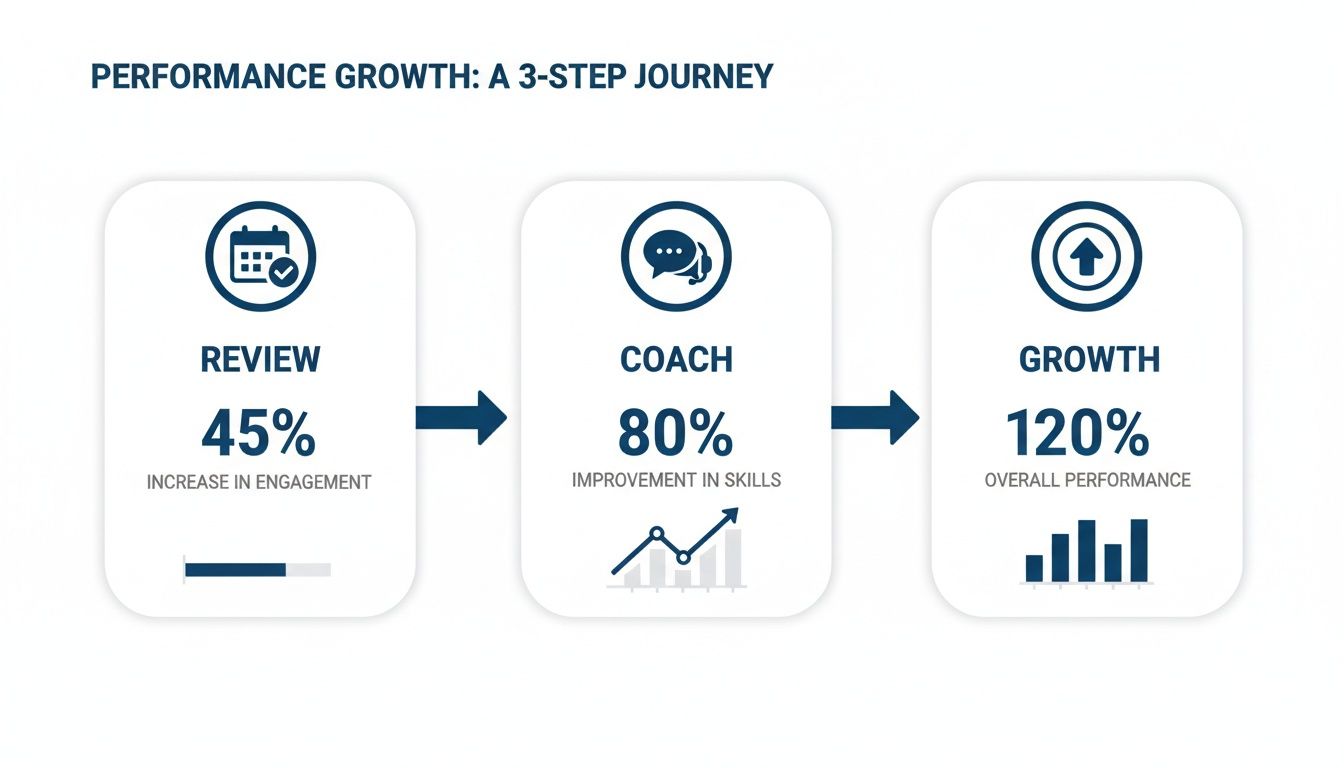
When you see it laid out like this, it’s clear that effective measurement and coaching are two sides of the same coin. By tracking the right metrics and staying alert to these common traps, you can build a resilient, high-performing culture that is genuinely people-first.
Answering Your Questions on People-First Leadership
Embracing a new leadership philosophy always brings up practical questions. For small and midsize business leaders, where every decision hits the bottom line, it’s crucial to understand how a people-first leadership approach actually works in the real world. This isn’t just theory; it’s about making smart, sustainable choices for your company and your team.
We hear a lot of the same concerns from leaders ready to make this shift. Let’s tackle them head-on.
Can a Small Business Really Afford to Be People-First?
The better question is, can you afford not to be? The hidden costs of high turnover—recruiting fees, lost productivity, training new hires—add up fast. They often far exceed the investment needed to build a great culture.
Being people-first isn’t about expensive perks. It’s founded on trust, flexibility, and clear communication, which cost very little.
Plus, strategic partnerships can make key investments much more affordable. A Professional Employer Organization (PEO), for instance, gives you access to top-tier benefits at SMB-friendly rates, leveling the playing field with your larger competitors.
The ROI of a people-first approach shows up in higher retention, improved productivity, and a team that actively drives the company’s growth. It’s an investment that pays for itself many times over.
How Do You Handle Accountability in This Culture?
In a people-first culture, accountability and compassion are two sides of the same coin. It all starts with absolute clarity on roles, responsibilities, and what success looks like. When people know the target, they’re much more likely to hit it.
When performance issues come up, the first response should be supportive curiosity, not punitive action. The goal is to figure out the root cause.
- Is it a skills gap that requires more training?
- Are they missing resources or hitting a roadblock in a process?
- Is something outside of work affecting their performance?
When you approach the conversation as a coach who wants them to succeed, you reinforce high standards while proving you’re invested in them as a person. This builds the kind of trust and genuine ownership that leading by fear can never achieve. This approach doesn’t lower the bar; it gives people the support they need to clear it.
My Managers Are Swamped. How Can I Train Them?
This is a critical insight. Your people-first initiative will stall if your managers are too burned out to lead it. They are the essential link between your vision and your team’s daily experience, so supporting them has to be step one.
The most strategic move you can make is to lift their administrative burden. If your managers are drowning in timesheet approvals, navigating complex HR issues, or fumbling with payroll questions, they have no capacity left for real leadership.
Outsourcing these tactical HR functions is a game-changer. Once they have that bandwidth back, you can focus training on core leadership skills:
- Facilitating effective one-on-ones that go beyond simple status updates.
- Giving developmental feedback that inspires growth, not defensiveness.
- Recognizing their teams’ efforts in authentic and meaningful ways.
Start by introducing one new habit at a time. And remember, the most powerful training tool you have is your own example. When senior leaders model these behaviors, you show your managers exactly what people-first leadership looks like in action.
Ready to build a people-first culture that actually drives performance?
Call Helpside today for your Free 15-Minute Benefits Audit: 1-800-748-5102
Further Readings:
What Great Leaders Do Differently: Lessons for Small Business Owners
How to Create a Culture of Feedback in the Workplace
How a PEO Can Help Small Businesses Improve Employee Retention
At Helpside, we handle the complexities of payroll, benefits, and HR compliance so you can free up your managers to become the people-first leaders your business needs. If you’re ready to build a culture that drives growth, discover how our PEO services can support your vision.