Services
Payroll, benefits, HR, and risk management in one PEO model built to lighten the load for small businesses.

A lot of owners think they have risk handled because they bought workers' comp, general liability, and an employee handbook template a few years ago. Then one injury happens, the employee is out longer than expected, the supervisor misses documentation steps, payroll keeps running into classification questions, and the owner ends up spending more time managing fallout than running the business.
That's usually the moment the conversation changes. The issue isn't just insurance coverage. It's whether the business has a working system for safety, claims, HR compliance, and follow-up when something goes wrong.
For employers with growing teams, risk management services insurance isn't really about buying another line item. It's about reducing preventable losses, keeping claims from spiraling, and making sure one operational mistake doesn't become a payroll, legal, and retention problem at the same time.
A common small business scenario looks like this. An employee strains a shoulder lifting materials, reports the injury late, and the manager doesn't document witness details or modified duty options. The workers' comp policy is in place, so the owner assumes the claim will take care of itself.
It usually doesn't.
The direct insurance claim is only one part of the cost. Someone has to cover the missed shifts. A manager spends hours talking to the carrier. Payroll has to sort out leave and wage issues. HR has to answer questions about return to work, restrictions, and documentation. If the process is sloppy, the claim gets more expensive and the team gets nervous.
When owners say "our premiums went up," they're often describing only the visible part of the problem.
Insurance pays for covered losses. It doesn't fix weak supervision, poor documentation, or preventable safety habits.
This is why buying a policy and managing risk are not the same thing. Risk touches physical safety, wage and hour practices, leave administration, employee relations, and basic operating discipline.
The market size reflects that this work has become a regular business function, not a niche add-on. The U.S. risk management, insurance advisory, and consulting market was estimated at $10.3 billion in 2026, with 26,478 businesses operating in the space, according to IBISWorld's industry research on risk management, insurance advisory, and consulting.
Not every risk issue starts with a major incident. Repetitive strain, workstation setup, poor lifting habits, and awkward seated posture can all contribute to absenteeism and discomfort over time. Practical prevention before a complaint turns into a claim is almost always less expensive than managing the claim after the fact.
Premiums are only one cost bucket. The larger cost is business disruption. Owners who treat risk as an active management process usually have more control over both.
Risk management services in insurance are the operating practices, support, and tools used to identify threats, evaluate them, reduce them, and keep monitoring them over time. Think of it as preventive maintenance for the business itself.
Most owners already understand this idea in another context. You maintain vehicles before they break down. You review cash flow before payroll gets tight. Risk works the same way. If you wait until there's a claim, audit, demand letter, or breach, you're already in the expensive phase.

Industry guidance defines risk management as a cycle of identifying, assessing, and controlling threats, treating that work as ongoing rather than a one-time review, as described in Guidewire's overview of risk management and risk assessment. The risk agenda has also shifted — Aon's global survey ranks cyber attack or data breach as the top current risk for insurers, weather and natural disasters second, and regulatory or legislative changes third. In the three-year outlook, AI rises to third place.
That matters for employers because the old model was narrower. Many businesses used to think mostly about property damage, workers' comp, and general liability. Today, owners also have to consider cyber exposure, employee data handling, remote work practices, handbook accuracy, state-specific leave rules, and AI use inside hiring or operations.
A practical risk program usually includes several moving parts:
For a small-business version of that framework, this guide to risk management for small businesses translates the concept into employer decisions instead of abstract insurance language.
Practical rule: If your "risk strategy" only shows up at renewal time, it isn't a strategy. It's a buying cycle.
Good risk management services insurance should connect insurance with operations. That means the broker, HR team, managers, payroll staff, and safety process can't all work from separate assumptions. When they do, claims linger, compliance slips, and no one has a clean picture of what needs fixing.
When an employer buys risk support, the pertinent question is: "What are we actually receiving?" If the answer is vague advice and a quarterly check-in, that usually won't move the business much.
The useful version of risk management services insurance has concrete deliverables. It gives managers tools, not just recommendations.
A practical program often includes:
A strong service model also needs a system behind it. A Risk Management Information System, or RMIS, centralizes policy, claim, and risk data so teams can track incidents, review trends, benchmark results, and automate workflows, as described in Sentry's explanation of Risk Management Information Systems.
Without a central system, employers end up with too many versions of the truth. The broker has one spreadsheet. HR has a folder. Payroll has notes in email. Supervisors have verbal updates. That's how deadlines get missed and patterns stay hidden.
The most important output is often disciplined follow-through. That means:
If a vendor can't show you how incidents are reported, tracked, escalated, and closed, you're not buying a system. You're buying opinions.
Owners usually ask the right question: "How does this save me money?" That's the right standard.
The problem is that many conversations about risk stay too vague. They talk about "creating value" or "being proactive" without tying that work to claim behavior, administrative time, or operational disruption. In practice, ROI comes from fewer preventable problems and tighter handling when something does happen.

| ROI Type | Where it shows up | What to look for |
|---|---|---|
| Direct | Claims, premium pressure, legal spend, penalties | Cleaner incident handling, fewer repeat injuries, better documentation |
| Indirect | Manager time, turnover disruption, employee confidence, continuity | Less scrambling, faster response, clearer ownership |
Better reporting produces better data. Better data supports better risk assessment. Better assessment leads to more targeted controls, claims handling changes, and compliance corrections. That loop is described well in Aclaimant's discussion of the insurance risk management process.
The activities that tend to matter most are not glamorous:
Not every program produces real return.
It usually falls short when the service stops at advice. A consultant identifies issues, sends a report, and leaves. No one updates training. No one changes supervisor behavior. No one tracks whether claims are being reported faster or whether repeat injuries are dropping. Then the business keeps paying for support without changing outcomes.
That's why many small employers benefit from a model that ties claims support, safety, and HR process together. For example, workers' compensation claims management support can make more financial sense when it's connected to the same team handling policy guidance, payroll coordination, and return-to-work communication.
Bottom line: Risk management pays when it changes behavior, not when it just produces paperwork.
Most employers don't need another vendor. They need fewer gaps.
The right partner depends on what problem you're solving. If you mainly need placement and renewal help, a traditional broker may be enough. If you want integrated HR, payroll, compliance, workers' comp coordination, and safety support under one roof, a PEO often fits better. If your company has the scale and appetite to retain more risk directly, a captive may be worth evaluating.
| Model | Core Function | Best For | Typical Drawback |
|---|---|---|---|
| PEO | Integrates HR, payroll, benefits, compliance, and risk support | Small and midsize employers that need operational help, not just policy placement | May be more than a business needs if it only wants insurance shopping |
| Traditional insurance broker | Places coverage and advises on insurance program structure | Employers that already have strong internal HR and safety capacity | Services can stay siloed from day-to-day people operations |
| Captive insurance program | Gives employers a more customized risk financing structure | Organizations with greater sophistication and appetite for retained risk | Requires stronger internal discipline and may not suit smaller employers |
A good vendor meeting should get specific fast. Ask questions that force the provider to describe process, ownership, and limitations.
The strongest small-business model usually has one trait: connected services. Payroll knows when an employee is out. HR knows what leave rules apply. Safety knows what caused the incident. The claim team knows whether modified duty exists.
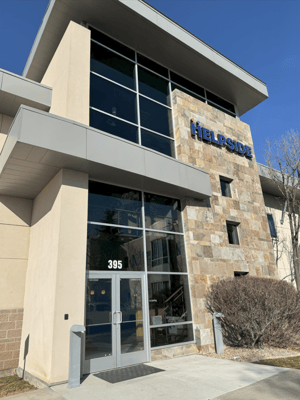
That's the reason many employers look at a PEO model instead of a pure insurance relationship. How a PEO can reduce risk for small businesses is a useful resource because it frames risk as an operating issue, not just an insurance issue. Helpside is one example of that model, combining payroll, HR, benefits, and risk support for small and midsize employers.
Don't ask a vendor whether they "care about compliance." Ask who updates the handbook, who trains managers, and who owns the deadline when a problem surfaces.
The best choice is rarely the one with the broadest sales pitch. It's the one with the fewest blind spots.
Growth across state lines usually exposes weaknesses that never showed up when the whole team sat in one office under one set of local practices. Owners assume they can extend the same handbook, same leave habits, and same manager playbook across every state. That's where trouble starts.
Employment law isn't one-size-fits-all. Workers' comp practices, leave rules, wage and hour requirements, final pay timing, required notices, and training expectations can vary by state. A process that's acceptable in one state may be incomplete in another.

A growing employer often has information in too many places. Payroll tracks tax setup. HR manages onboarding forms. Operations handles schedules. Managers make local decisions about discipline or leave. No one owns the full risk picture.
That creates a predictable set of problems:
The better approach is centralized oversight with local-state execution.
For multi-state employers, risk management services insurance transcends claim prevention, becoming a framework for keeping growth from outpacing controls.
The practical takeaway is simple. Insurance matters, but it's only one layer of protection. The businesses that stay steadier over time are the ones that connect safety, claims handling, HR compliance, and manager accountability into one working system.
That's what makes risk management services insurance valuable when it's done well. It can reduce preventable disruption, tighten claim response, and help owners make better decisions with fewer blind spots. It can also fail if it lives only in reports, renewal meetings, or software no one uses.
If you're evaluating your current setup, start with a blunt internal review. Ask whether incidents are reported quickly, whether supervisors know what to do on day one, whether your handbook matches current practice, and whether multi-state rules are being checked before managers act. If the answer is inconsistent, that's the gap to solve first.
If you want a practical second opinion on your current setup, Helpside works with small and midsize employers that need payroll, HR, benefits, and risk support to operate as one coordinated system. A good next step is to compare your current vendors against your actual pain points, especially claims handling, manager training, and multi-state compliance.